
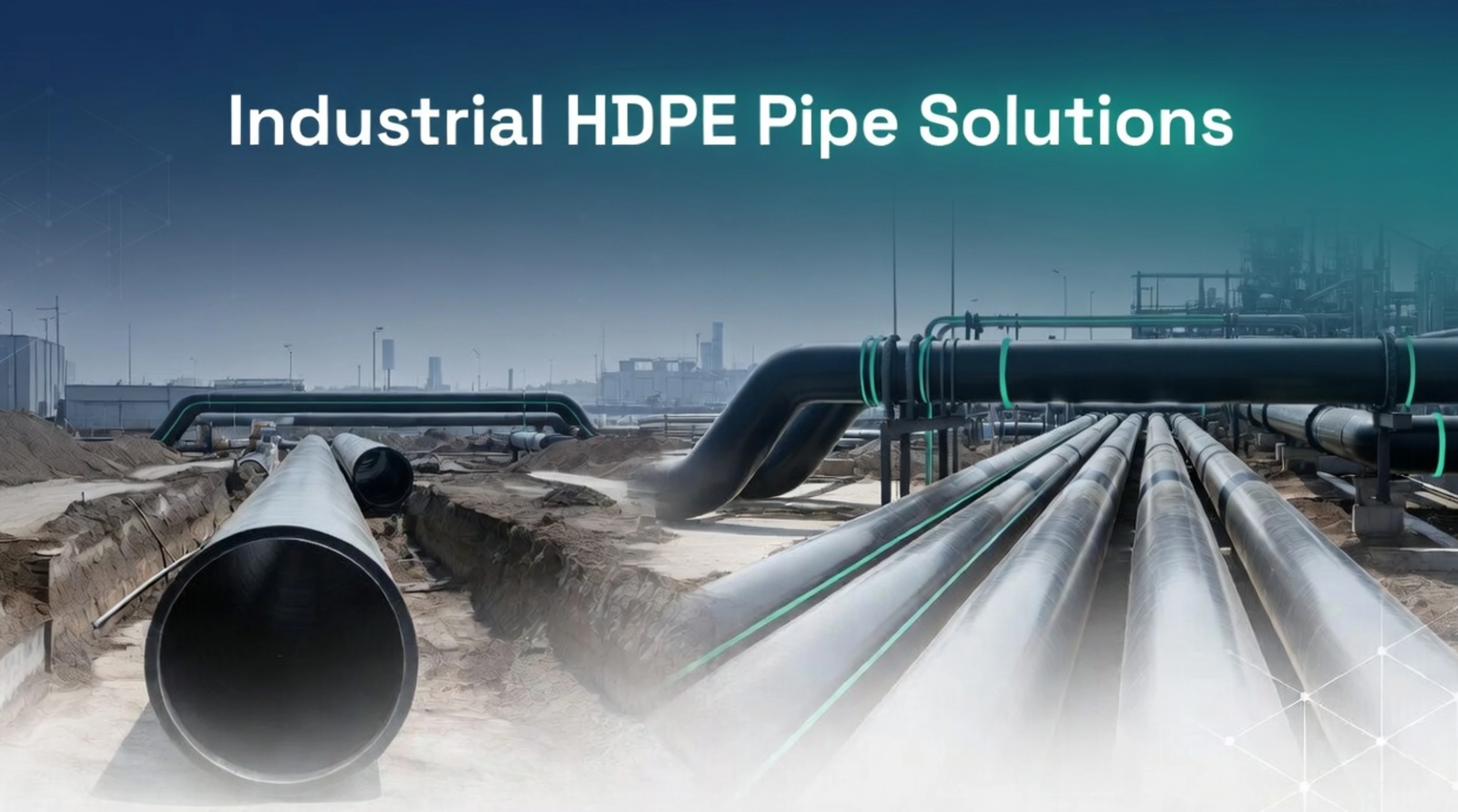
In rapidly developing regions like the Gulf, infrastructure and industrial projects demand materials that are durable, cost-efficient, and built for extreme environments. This is where HDPE pipe applications play a critical role.
From water supply networks to industrial pipelines, HDPE pipes for industrial and infrastructure projects have become a preferred solution across UAE, Saudi Arabia, Qatar, Oman, Kuwait, and Bahrain. Their strength, flexibility, and corrosion resistance make them ideal for long-term performance in challenging conditions.
What Are HDPE Pipes?
High-Density Polyethylene (HDPE) pipes are thermoplastic pipes designed for high-performance fluid and gas transport systems. In contrast to conventional metal or concrete conduits, HDPE pipes exhibit a distinctly superior set of performance characteristics:
These properties make one of the most reliable materials for modern infrastructure.
Why HDPE Pipes Are Ideal for Gulf Projects
The Gulf region presents unique challenges such as high temperatures, saline soil, and demanding industrial environments. HDPE pipes are engineered to handle these conditions effectively.
1. Corrosion Resistance
Unlike metal pipes, HDPE does not rust or corrode, making it perfect for coastal and high-salinity regions across the GCC.
2. Leak-Proof Performance
HDPE pipes are joined using butt fusion or electrofusion, creating seamless joints that reduce leakage risks—critical for large infrastructure projects.
3. Flexibility and Durability
Their flexibility allows HDPE pipes to withstand ground movement and pressure variations, ensuring reliability in underground infrastructure systems.
4. Long Service Life
HDPE pipes can last for decades, making them ideal for long-term industrial and municipal investments.
Key HDPE Pipe Applications in Industrial and Infrastructure Projects
1. Water Supply and Distribution
One of the most common pipe applications is in water distribution networks. Governments across the Gulf rely on HDPE for:
Its leak-proof design ensures efficient water management in water-scarce regions.
2. Sewage and Drainage Systems
HDPE pipes are widely used in underground drainage and sewage systems due to their chemical resistance and durability.
They are ideal for:
This makes them a reliable choice for expanding cities in the GCC.
3. Oil and Gas Industry
The Gulf region is a global hub for oil and gas, and HDPE pipes for industrial and infrastructure projects are extensively used in this sector.
Applications include:
Their resistance to chemicals and pressure makes them highly suitable for industrial use.
4. Mining and Industrial Applications
HDPE pipes are also used in heavy industries such as mining and manufacturing.
Key uses:
Their ability to handle abrasive materials ensures long-term performance.
5. Cable Protection and Infrastructure Ducting
In large infrastructure developments, HDPE are used to protect electrical and communication cables.
Common uses:
This application is growing rapidly in Gulf smart city projects.
Why Contractors Prefer HDPE Pipes in GCC
Across the Gulf region, contractors and developers prefer it because they offer:
These benefits make HDPE a smart investment for both public and private infrastructure projects.
How to Choose the Right Piping Solution for Your Project
If you are planning an infrastructure or industrial project in the Gulf, consider these factors:
Pipe Specifications
Choose the right diameter, pressure rating (PN), and SDR value based on your project requirements.
Quality Standards
Ensure the pipes comply with international standards such as ISO and ASTM for durability and safety.
Installation Method
Select appropriate joining methods like butt fusion to ensure leak-proof performance.
Supplier Expertise
Work with experienced suppliers who understand GCC project requirements and environmental conditions.
Future of Industrial Pipe Applications in the Gulf
With ongoing mega projects and infrastructure expansion across the GCC, the demand for Industrial applications is expected to grow significantly.
Key trends include:
It will continue to play a vital role in supporting these developments.
Conclusion
When it comes to reliability, durability, and performance, HDPE pipes for industrial and infrastructure projects stand out as a proven solution. Their ability to handle extreme conditions, combined with leak-proof systems and long service life, makes them an essential component of modern infrastructure in the Gulf region.
Whether for water supply, industrial pipelines, or urban development, HDPE pipe applications offer a future-ready solution for sustainable and efficient project execution.