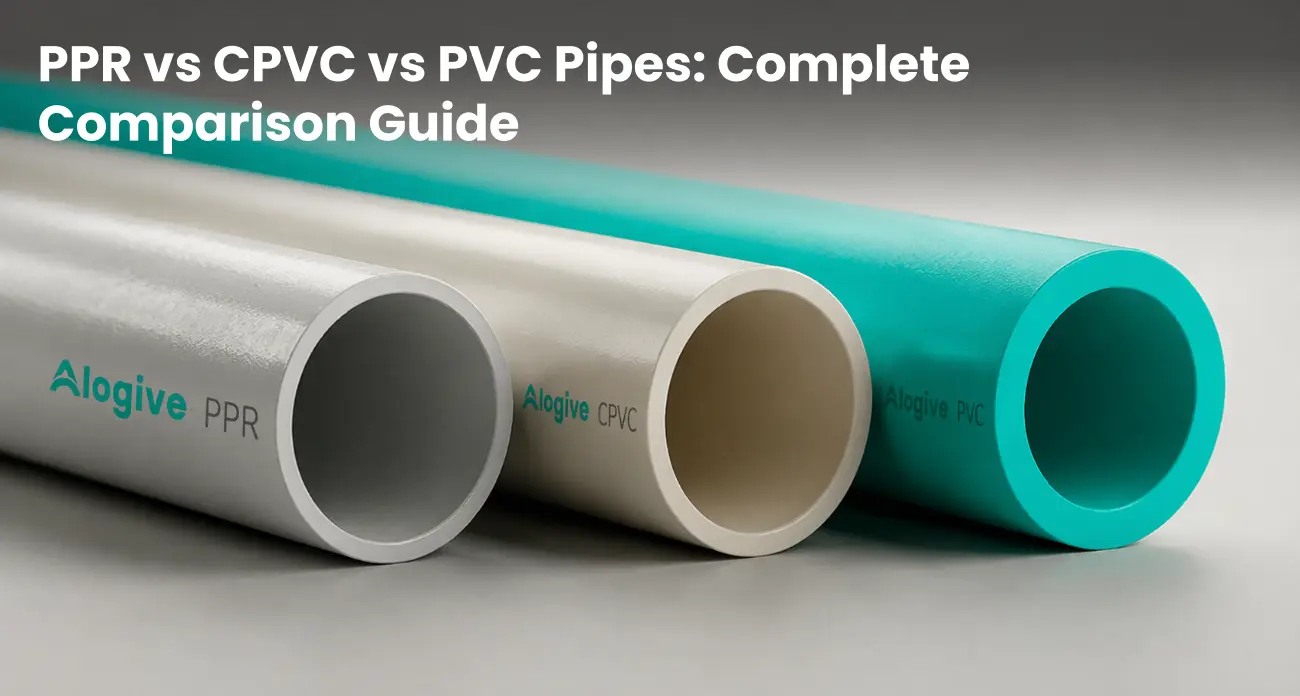

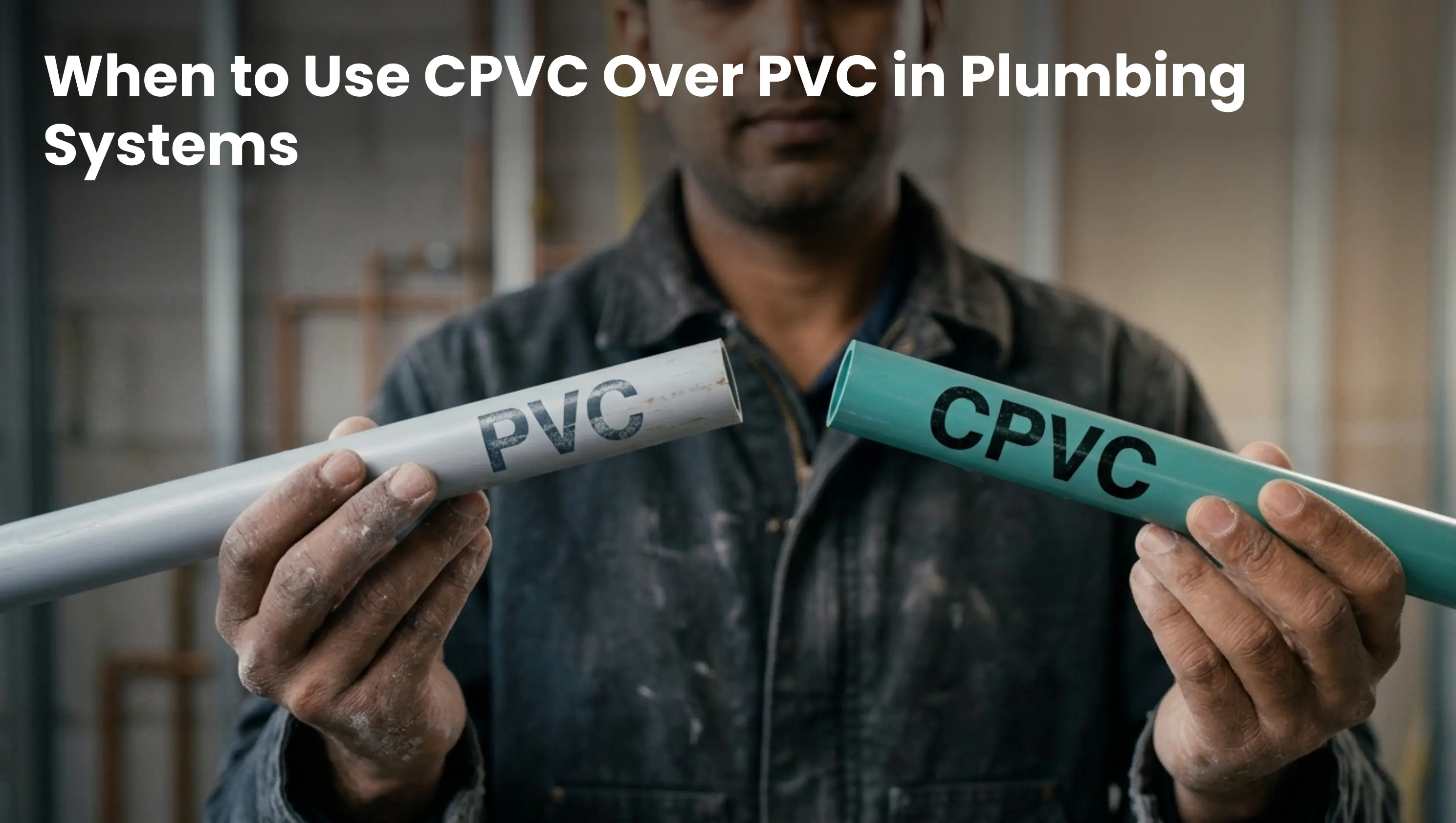
Selecting the right piping material is one of the most important decisions in any plumbing project. Although both CPVC and PVC are extensively utilized across residential, commercial, and industrial environments, a thorough understanding of the circumstances under which CPVC should be specified over PVC can substantially enhance system performance, operational longevity, and long-term reliability.
Many property owners, contractors, and engineers often compare CPVC vs PVC plumbing systems to determine which material best suits their requirements. The answer depends on factors such as temperature, pressure, application type, and expected service life.
Understanding CPVC and PVC Pipes
Before evaluating it is important to understand the basic characteristics of both materials.
CPVC Pipes
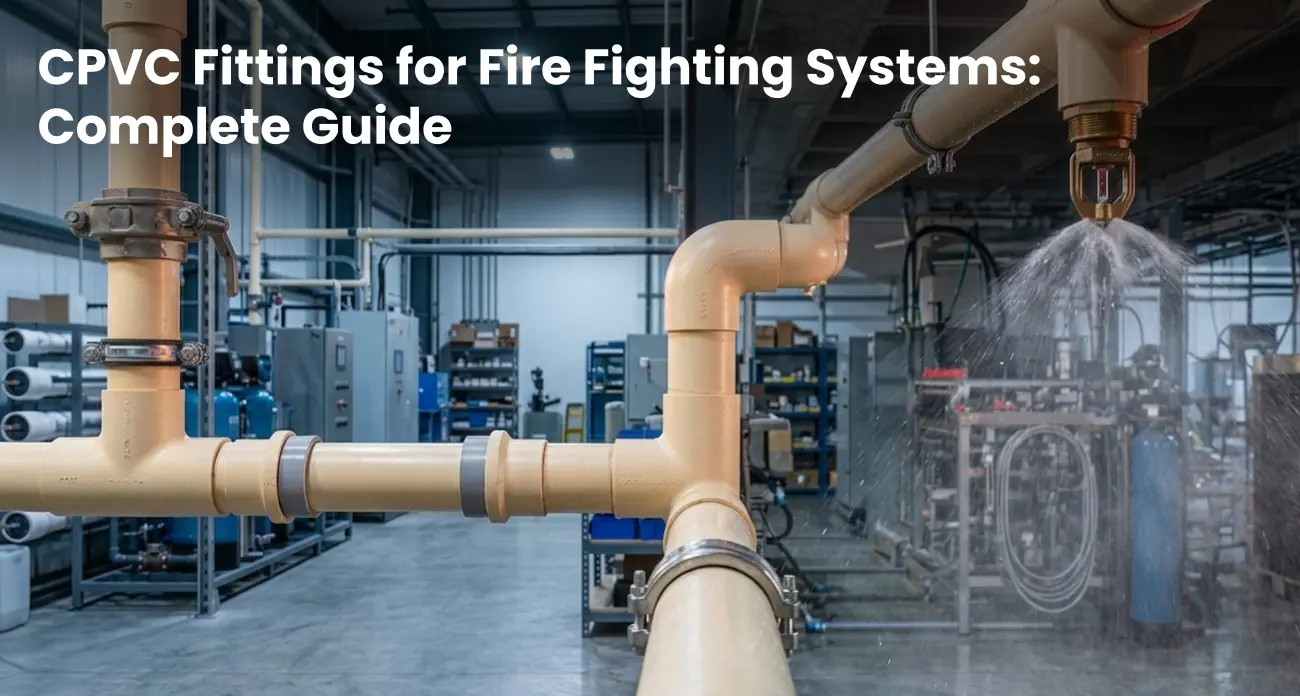
Chlorinated Polyvinyl Chloride (CPVC) is a thermoplastic piping material specifically engineered to handle higher temperatures and pressures. It is commonly used in hot and cold water distribution systems, commercial plumbing, and fire protection applications.
PVC Pipes
Polyvinyl Chloride (PVC) is a durable and cost-effective piping material widely used for drainage, irrigation, wastewater management, and cold water supply systems.
Understanding the difference between CPVC and PVC pipes helps ensure the right material is selected for the intended application.
Difference Between CPVC and PVC Pipes
Although both materials belong to the same polymer family, their performance characteristics vary considerably.
| Feature | CPVC | PVC |
|---|---|---|
| Temperature Resistance | High | Moderate |
| Hot Water Applications | Suitable | Not Recommended |
| Pressure Handling | Higher | Standard |
| Plumbing Usage | Hot and Cold Water | Cold Water and Drainage |
| Cost | Higher | More Economical |
| Durability | Excellent | Good |
The most significant difference lies in CPVC vs PVC temperature resistance, making CPVC the preferred option for applications involving elevated water temperatures.
When Should CPVC Be Used Instead of PVC?
One of the most frequently asked questions is: When should CPVC be used instead of PVC?
1. Hot Water Distribution Systems
The primary reason for choosing CPVC over PVC is temperature performance.
PVC, on the other hand, is generally designed for cold water applications and may lose structural integrity when exposed to prolonged heat.
2. Commercial Plumbing Systems
Commercial buildings often require piping systems capable of handling varying temperatures and continuous water flow.
CPVC pipes for plumbing systems provide enhanced durability and temperature resistance, making them suitable for hotels, hospitals, office buildings, and educational institutions.
3. High-Temperature Environments
Industrial facilities and specialized plumbing installations frequently encounter elevated temperatures.
In these environments, CPVC offers superior reliability compared to PVC and helps maintain long-term system performance.
The benefits of CPVC in plumbing systems become especially evident in applications where maintenance costs must be minimized.
A common question among homeowners is: Can PVC be used for hot water plumbing?
In most cases, the answer is no.
PVC is predominantly utilized in cold water conveyance, drainage networks, and wastewater management systems. For hot water applications, CPVC remains the safer and more reliable choice.
Benefits of CPVC in Plumbing Systems
The growing popularity of CPVC can be attributed to several performance advantages.
Corrosion Resistance
Like PVC, CPVC does not rust or corrode, making it suitable for long-term water distribution networks.
Long Service Life
Properly installed CPVC systems can provide decades of dependable service with minimal maintenance.
Reliable Water Flow
The smooth internal surface helps maintain consistent water flow while reducing scaling and deposits.
Versatile Applications
CPVC is suitable for residential, commercial, institutional, and industrial plumbing systems.
Which Material Offers Superior Performance for Plumbing Systems: CPVC or PVC?
Many professionals ask, which is better CPVC or PVC for plumbing?
The answer depends on the application.
Choose CPVC When:
Choose PVC When:
Both materials offer value, but the decision should always align with the project's operational requirements.
A Systematic Approach to Choosing Between CPVC and PVC Piping Solutions
Understanding how to choose between them it requires evaluating several key factors:
Water Temperature
Hot water systems favor CPVC, while cold water systems can effectively utilize PVC.
Project Budget
PVC is generally more economical, whereas CPVC provides enhanced performance at a slightly higher investment.
Installation Environment
Consider pressure requirements, operating conditions, and long-term maintenance expectations.
System Lifespan
Projects requiring extended service life and superior reliability often benefit from CPVC installations.
Conclusion
Knowing when to use CPVC over PVC is essential for building efficient and reliable plumbing systems.
By understanding the difference between CPVC and PVC pipes, evaluating CPVC vs PVC plumbing systems, and considering factors such as temperature, durability, and cost, property owners and contractors can make informed decisions that support long-term plumbing performance.
When reliability, thermal stability, and longevity matter most, CPVC remains the preferred choice for modern plumbing systems.
Frequently Asked Questions (FAQs)
When should CPVC be used instead of PVC in plumbing systems?
CPVC should be used instead of PVC when the plumbing system is required to handle hot water, higher operating temperatures, or increased pressure conditions. Its enhanced thermal resistance makes it suitable for residential, commercial, and institutional hot and cold water distribution networks where long-term performance and reliability are critical.
Can PVC pipes be used for hot water plumbing applications?
PVC pipes are generally not recommended for hot water plumbing applications. They are primarily designed for cold water distribution, drainage, and wastewater systems. Continuous exposure to elevated temperatures may affect their structural integrity, making CPVC a more suitable option for hot water systems.
What are the key benefits of using CPVC over PVC?
The primary benefits of using CPVC over PVC include superior temperature resistance, enhanced pressure-handling capability, excellent corrosion resistance, longer service life, and suitability for both hot and cold water applications. These characteristics make CPVC a preferred material for modern plumbing systems.
Which is better for residential plumbing: CPVC or PVC?
The choice depends on the application. CPVC is generally preferred for hot and cold water supply systems within residential properties, while PVC is commonly used for drainage, waste, vent (DWV), and cold water applications. Selecting the right material should be based on temperature requirements, budget, and intended use.
How do I choose between CPVC and PVC pipes for my project?
When choosing between CPVC and PVC pipes, consider factors such as water temperature, pressure requirements, installation environment, expected lifespan, and project budget. CPVC is ideal for high-temperature and potable water applications, whereas PVC remains a cost-effective solution for drainage and cold water systems. Proper material selection helps ensure optimal plumbing performance and long-term reliability.