
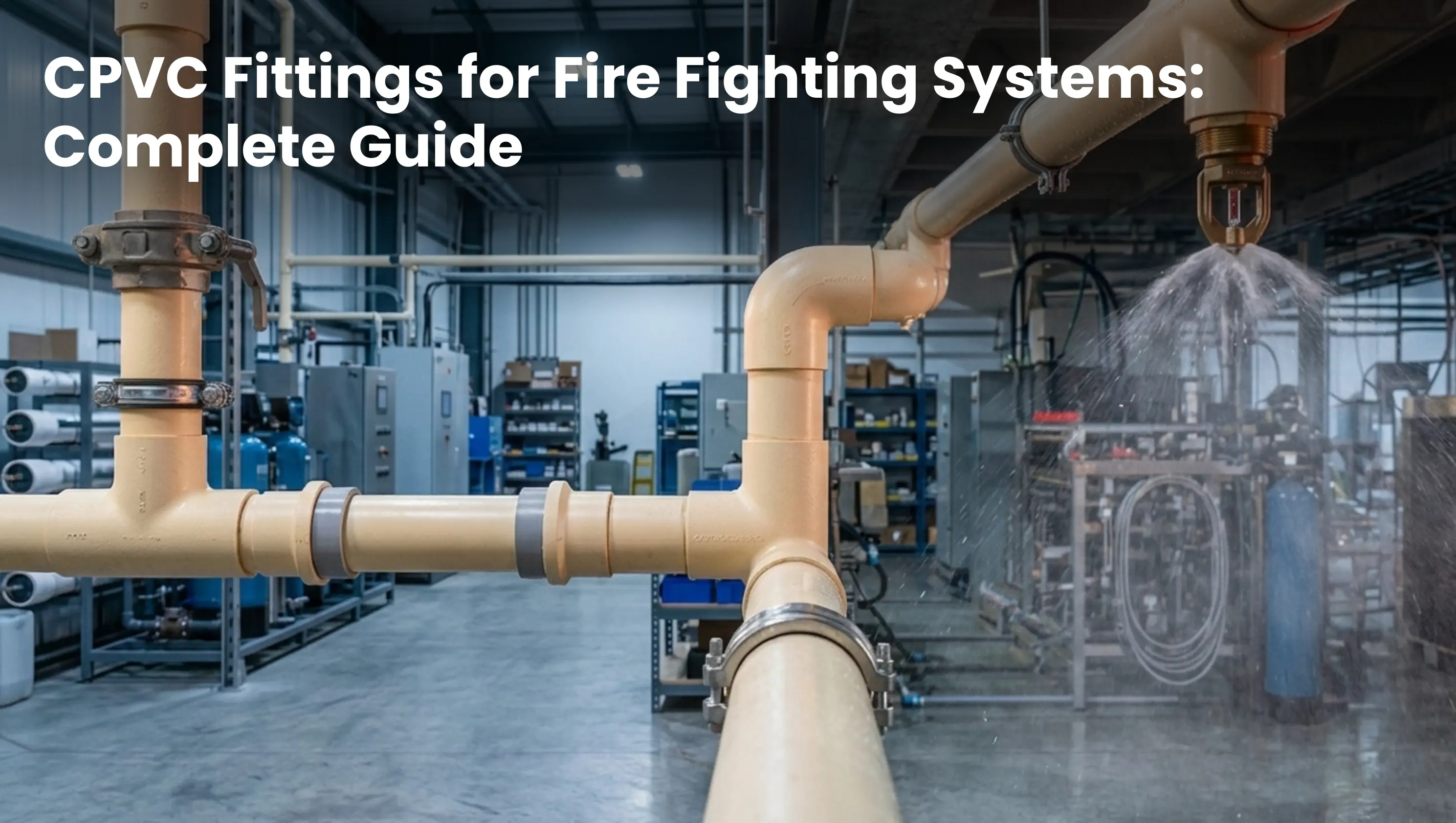
Fire safety is a critical component of modern building infrastructure. Whether in residential complexes, commercial facilities, or industrial plants, a reliable fire protection network can make the difference between minor damage and catastrophic loss. Among the various materials used today, CPVC fittings for fire fighting systems have emerged as a preferred choice due to their durability, efficiency, and cost-effectiveness.
This comprehensive guide explains how CPVC systems work, their advantages, applicable standards, and how to choose the right CPVC fire sprinkler fittings supplier for your project.
What Are CPVC Fittings for Fire Fighting Systems?
CPVC (Chlorinated Polyvinyl Chloride) is a thermoplastic material engineered to withstand high temperatures and pressures. In fire safety applications, CPVC fire sprinkler fittings are used to distribute water through an automatic sprinkler network designed to suppress or extinguish fires.
These systems typically include pipes, fittings, valves, and sprinkler heads that activate when exposed to heat. Because of their corrosion resistance and lightweight structure, CPVC pipes and fittings for fire protection are widely used in modern construction projects.
How CPVC Fire Sprinkler Systems Work
Understanding how CPVC fire sprinkler systems work helps in appreciating their reliability. When a fire occurs, the heat activates a sprinkler head, releasing water directly onto the affected area.
Key Components:
The seamless integration of these components ensures rapid response, minimizing fire damage and enhancing occupant safety.
Benefits of CPVC Fittings in Fire Fighting Systems
The growing adoption of CPVC systems is driven by several advantages. The benefits of CPVC fittings in fire fighting systems include:
1. Corrosion Resistance
Unlike metal alternatives, CPVC does not rust or corrode, ensuring long-term reliability even in humid or chemically aggressive environments.
2. High Temperature Performance
CPVC is engineered to handle elevated temperatures, making it suitable for fire protection applications.
3. Leak-Proof Joints
Solvent cement joining creates strong, permanent bonds that significantly reduce the risk of leakage.
4. Lightweight and Easy Installation
CPVC components are easy to transport and install, reducing labor costs and project timelines.
5. Low Maintenance
These systems require minimal upkeep, making them a cost-effective solution over their lifespan.
6. Smooth Internal Surface
The smooth bore minimizes friction losses, ensuring efficient water flow during fire emergencies.
Why Use CPVC for Fire Protection Systems?
Many engineers and contractors ask, where the answer is.
These features make CPVC a dependable choice for residential, commercial, and institutional buildings.
CPVC vs Steel Fire Sprinkler Systems
A common comparison in the industry is CPVC vs steel fire sprinkler systems. Each material has its advantages, but CPVC often stands out in several areas.
| Feature | CPVC Systems | Steel Systems |
|---|---|---|
| Corrosion Resistance | Excellent | Prone to rust |
| Installation | Quick and easy | Labor-intensive |
| Weight | Lightweight | Heavy |
| Maintenance | Minimal | Higher |
| Cost | Cost-effective | Expensive |
| Hydraulic Efficiency | High | Moderate |
Conclusion: While steel systems are suitable for certain industrial applications, CPVC offers superior benefits for most commercial and residential projects.
What Standards Apply to CPVC Fire Sprinkler Systems?
Compliance with international standards is essential to ensure safety and reliability. When evaluating what standards apply to CPVC fire sprinkler systems, consider the following:
Selecting products that meet these standards ensures regulatory compliance and long-term system integrity.
How to Choose CPVC Fittings for Fire Protection
The careful selection of appropriate components is fundamental to ensuring optimal system performance. Here’s a practical guide on how to choose CPVC fittings for fire protection:
1. Verify Certifications
Ensure the fittings are UL-listed and FM-approved, confirming compliance with international safety standards.
2. Assess Product Quality
High-quality materials enhance durability and system reliability.
3. Evaluate Supplier Expertise
Partner with an experienced CPVC fire sprinkler fittings supplier who can provide technical support and consistent product availability.
4. Consider Application Requirements
Select fittings based on building type, pressure ratings, and system design.
5. Check Compatibility
Ensure compatibility with other system components to avoid installation issues.
Are CPVC Fire Sprinkler Systems Safe?
The answer is a resounding yes. CPVC systems have been extensively tested and approved for fire protection applications worldwide.
Safety Highlights:
When properly installed and maintained, CPVC systems provide reliable and long-lasting fire protection.
Applications of CPVC Fire Protection Systems
CPVC fire protection systems are suitable for a wide range of environments, including:
Their versatility and reliability make them an ideal choice for modern infrastructure.
Future of CPVC in Fire Safety
With increasing emphasis on building safety and sustainability, CPVC continues to gain popularity. Innovations in material technology and system design are enhancing performance, making CPVC a future-ready solution for fire protection.
As urbanization accelerates, especially in regions like the GCC, the demand for efficient and compliant fire safety systems will continue to rise, positioning CPVC as a leading material in the industry.
Conclusion
CPVC fittings for fire fighting systems offer a reliable, cost-effective, and safe solution for modern fire protection needs. From their corrosion resistance and ease of installation to compliance with global standards, CPVC systems provide unmatched advantages over traditional materials.
By understanding how CPVC fire sprinkler systems work, evaluating CPVC vs steel fire sprinkler systems, and selecting a trusted CPVC fire sprinkler fittings supplier, stakeholders can ensure optimal safety and long-term performance.
Investing in high-quality CPVC pipes and fittings for fire protection is not just a regulatory requirement—it is a commitment to safeguarding lives and property.
What are CPVC fittings for fire fighting systems?
CPVC fittings for fire fighting systems are specialized components used in automatic sprinkler networks to distribute water efficiently. They are corrosion-resistant, lightweight, and compliant with international fire safety standards.
FAQs
How do CPVC fire sprinkler systems work?
CPVC fire sprinkler systems remain pressurized with water. When heat from a fire activates a sprinkler head, water is discharged directly onto the affected area, helping to suppress or extinguish the fire.
Why use CPVC for fire protection systems?
CPVC is preferred for fire protection systems due to its corrosion resistance, ease of installation, cost-effectiveness, and compliance with standards such as NFPA, UL, and FM.
Are CPVC fire sprinkler systems safe?
Yes, CPVC fire sprinkler systems are safe and widely used worldwide. They are rigorously tested and certified to meet international fire safety standards, ensuring reliable performance during emergencies.
What standards apply to CPVC fire sprinkler systems?
Key standards include NFPA 13, NFPA 13R, NFPA 13D, UL listings, FM approvals, and ASTM specifications, all of which ensure the safety and reliability of CPVC fire protection systems.
How to choose CPVC fittings for fire protection?
To choose the right CPVC fittings, verify UL and FM certifications, assess product quality, evaluate supplier expertise, and ensure compatibility with the overall fire protection system design.