
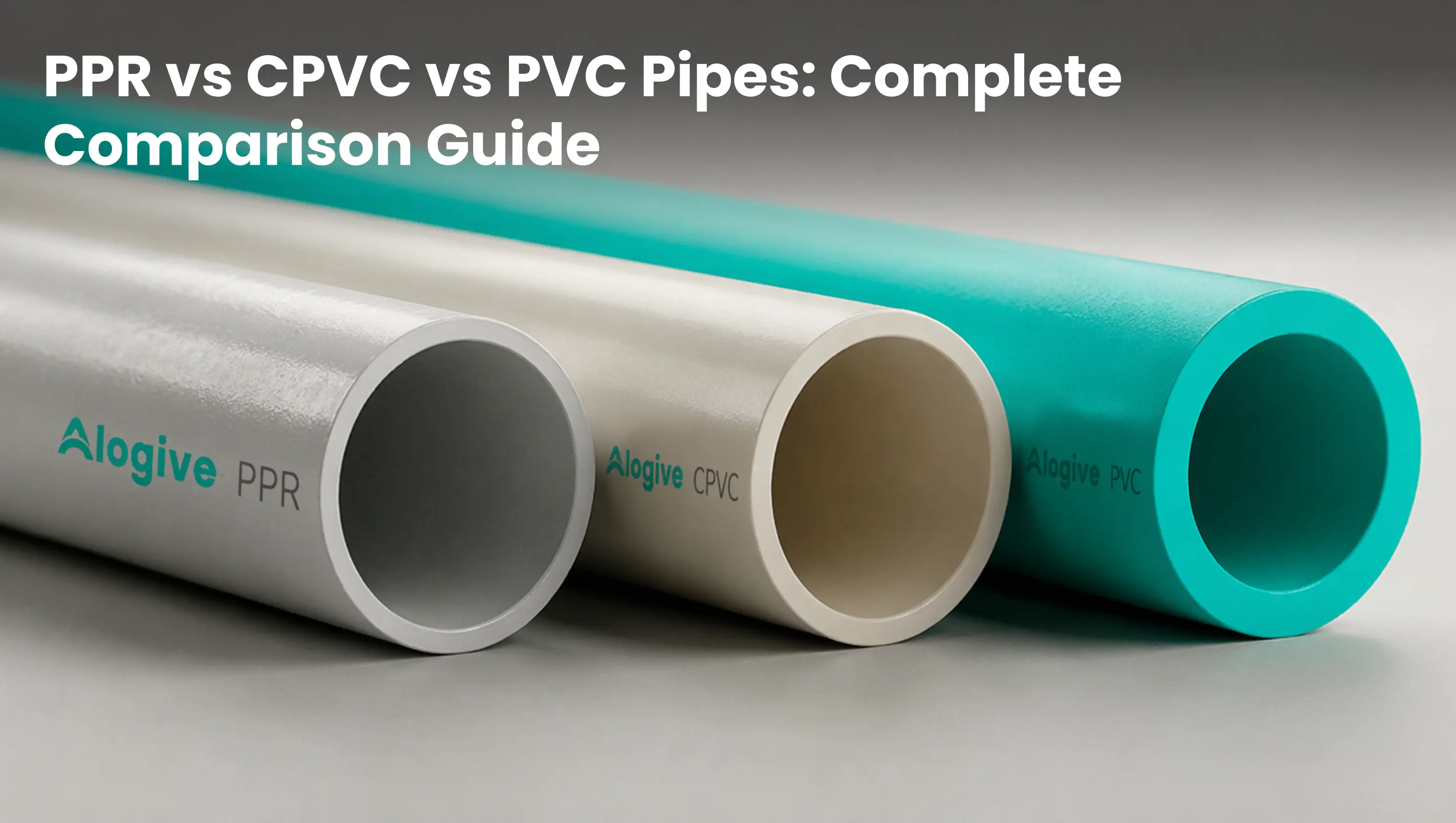
Choosing the right piping material is essential for building efficient and long-lasting plumbing systems. Whether for residential, commercial, or industrial projects, selecting the correct pipe impacts water flow, durability, maintenance, and overall performance.
Among the most commonly used options today are PPR, CPVC, and PVC pipes. This guide provides a detailed PPR vs CPVC vs PVC pipes comparison to help homeowners, contractors, and engineers understand the differences and select the best solution for their applications.
What Are PPR, CPVC, and PVC Pipes?
Before comparing them, it is important to understand each material.
PPR Pipes:
PPR (Polypropylene Random Copolymer) pipes are designed for hot and cold water systems. They are widely used in modern plumbing because of their high temperature resistance and long service life.
CPVC Pipes:
CPVC (Chlorinated Polyvinyl Chloride) pipes are engineered for higher temperature applications than standard PVC. They are commonly used in hot water plumbing and fire protection systems.
PVC Pipes:
PVC (Polyvinyl Chloride) pipes are lightweight and cost-effective piping materials typically used for drainage, irrigation, and cold water systems.
Difference Between PPR, CPVC, and PVC Pipes
Understanding the difference between PPR CPVC and PVC pipes helps determine the right material for specific plumbing needs.
| Feature | PPR Pipes | CPVC Pipes | PVC Pipes |
|---|---|---|---|
| Temperature Resistance | Very High | High | Low |
| Best Use | Hot & cold water | Hot water & fire systems | Drainage & cold water |
| Durability | Excellent | Very Good | Good |
| Flexibility | Moderate | Moderate | Low |
| Corrosion Resistance | Excellent | Excellent | Excellent |
| Installation | Heat fusion welding | Solvent cement | Solvent cement |
| Lifespan | 50+ years | 40–50 years | 20–30 years |
PPR Pipe vs CPVC Pipe
One of the most searched comparisons is PPR pipe vs CPVC pipe because both are commonly used in plumbing systems.
Advantages of PPR Pipes Over CPVC and PVC
The advantages of PPR pipes over CPVC and PVC include:
PPR pipes are often preferred in modern high-rise buildings and commercial projects where durability and performance are critical.
Benefits of CPVC Pipes
CPVC pipes also offer several important advantages:
For projects requiring reliable hot water distribution, CPVC remains a strong choice.
CPVC vs PVC Pipes
The comparison between CPVC vs PVC pipes is important because these materials are similar but designed for different purposes.
Key Differences:
If your project involves heated water, CPVC is usually the safer and more durable option.
Which Pipe Is Best for Hot Water Plumbing?
A common question homeowners ask is: Which pipe is best for hot water plumbing?
Best Options:
PVC pipes are not recommended for high-temperature water because prolonged heat exposure may weaken the material.
PPR vs CPVC vs PVC for Residential Plumbing
When evaluating PPR vs CPVC vs PVC for residential plumbing, the ideal choice depends on the application.
Recommended Usage:
Using the correct pipe type improves efficiency and reduces future maintenance issues.
Which Pipe Lasts Longer: PPR, CPVC, or PVC?
Another important factor is durability. Many buyers ask: Which pipe lasts longer PPR CPVC or PVC?
Expected Lifespan:
PPR generally offers the longest service life when installed correctly and used under recommended operating conditions.
How to Choose the Right Plumbing Pipe
Understanding how to choose the right plumbing pipe depends on several practical factors.
1. Water Temperature
2. Budget
3. Application Type
4. Durability Requirements
If long-term reliability is a priority, PPR pipes are often the preferred choice.
Best Pipes for Plumbing Systems
There is no single answer when selecting the best pipes for plumbing systems because each material serves different purposes.
Quick Recommendation:
The right decision depends on project requirements, water temperature, installation conditions, and budget.
This PPR vs CPVC vs PVC pipes comparison highlights the strengths and limitations of each piping material. While PPR offers exceptional durability and heat resistance, CPVC remains a practical option for residential plumbing, and PVC continues to be widely used for drainage and cold water applications.
Understanding the difference between PPR CPVC and PVC pipes allows homeowners, contractors, and developers to make informed decisions that improve system efficiency and long-term performance.
When selecting the best pipes for plumbing systems, consider water temperature, project type, durability expectations, and installation requirements to ensure reliable and cost-effective plumbing solutions for years to come.
FAQs
1. What is the main difference between PPR, CPVC, and PVC pipes?
The primary difference lies in their temperature resistance, application, and durability. PPR pipes are ideal for advanced hot and cold water systems, CPVC pipes perform well in hot water plumbing and fire protection applications, while PVC pipes are mainly used for drainage and cold water distribution. Each material is designed for specific plumbing requirements and operating conditions.
2. Which pipe is best for hot and cold water plumbing systems?
PPR pipes are widely considered one of the best options for hot and cold water plumbing systems due to their excellent thermal resistance, long service life, and leak-resistant fusion joints. CPVC pipes are also suitable for hot water applications, whereas PVC pipes are generally recommended only for cold water and drainage systems.
3. Which pipe lasts longer: PPR, CPVC, or PVC?
Among the three, PPR pipes typically offer the longest lifespan, often exceeding 50 years under proper operating conditions. CPVC pipes generally last around 40–50 years, while PVC pipes may last approximately 20–30 years depending on usage, pressure, and environmental conditions.
4. How do I choose the right plumbing pipe for my project?
Choosing the right plumbing pipe depends on factors such as water temperature, pressure requirements, installation environment, project budget, and long-term durability expectations. PPR pipes are preferred for premium plumbing systems, CPVC pipes are suitable for residential hot water applications, and PVC pipes are commonly selected for drainage and cost-effective cold water systems.
5. Are PPR, CPVC, and PVC pipes resistant to corrosion?
Yes, all three materials are resistant to corrosion, which makes them highly reliable for modern plumbing systems. Unlike metal pipes, these plastic piping materials do not rust or corrode over time, helping maintain water quality and reducing maintenance requirements.